
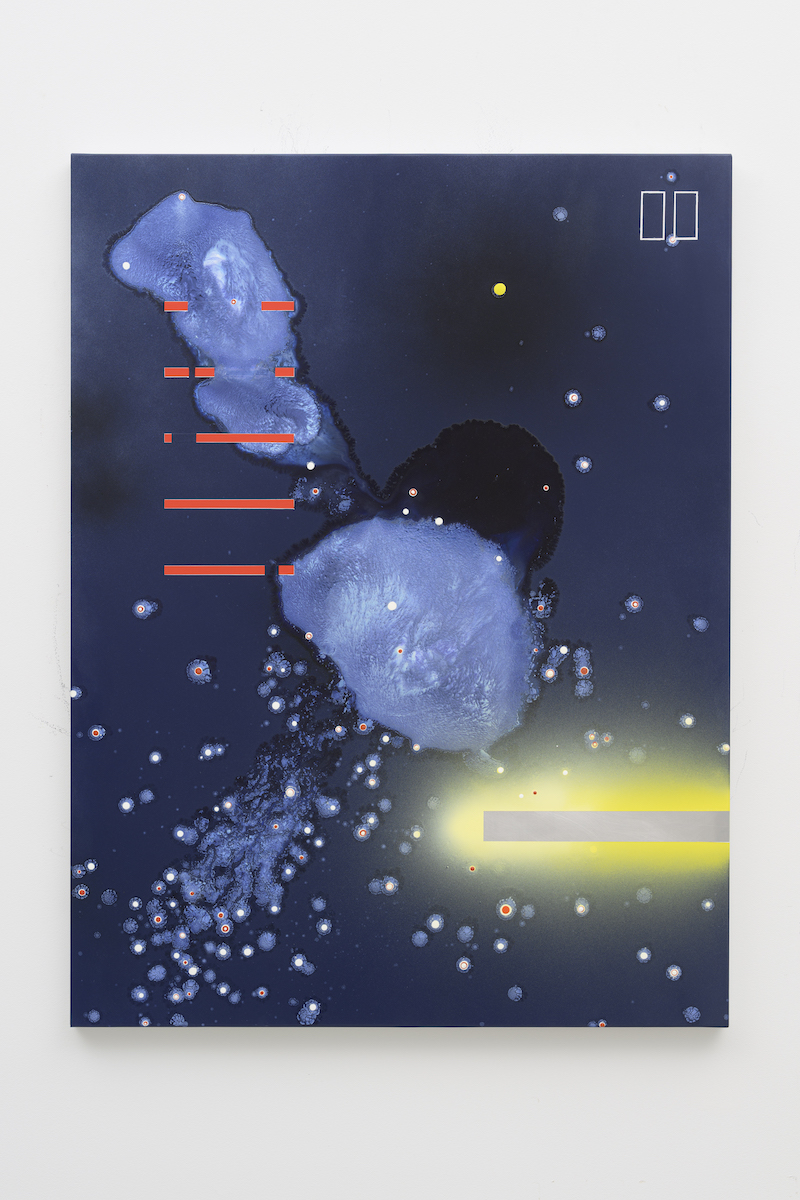
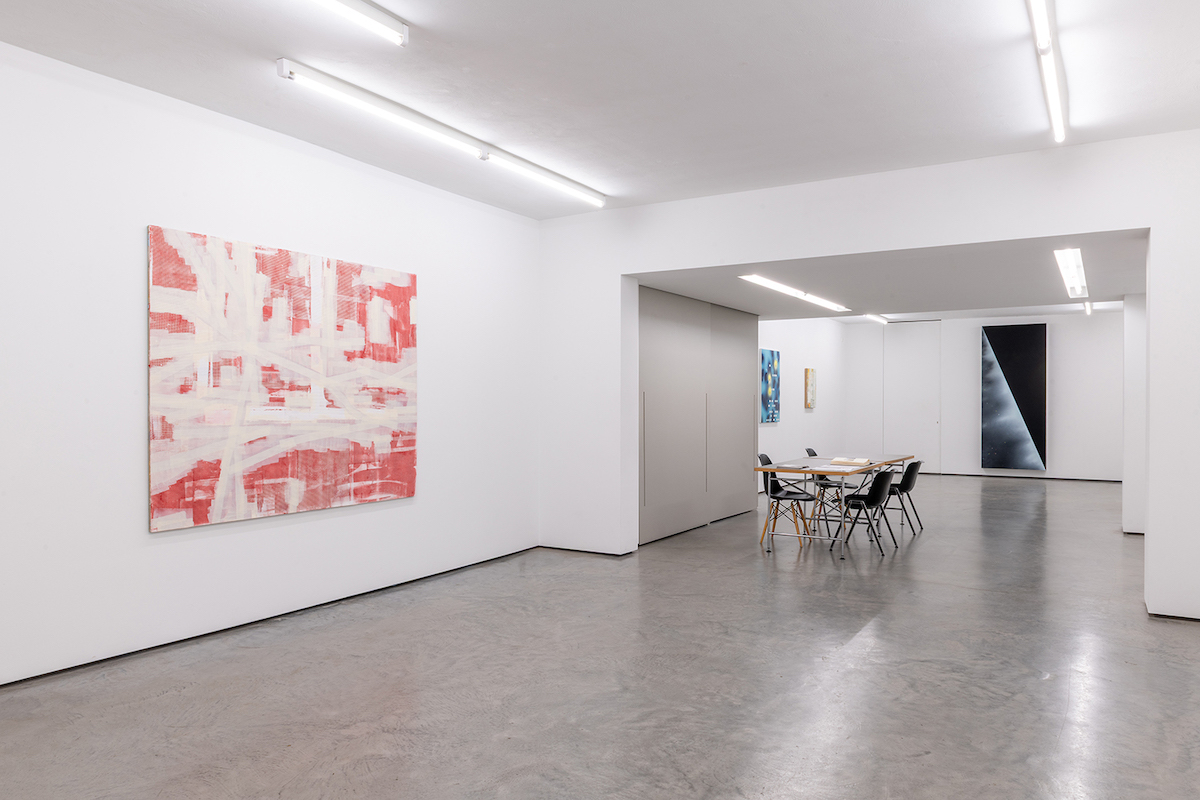
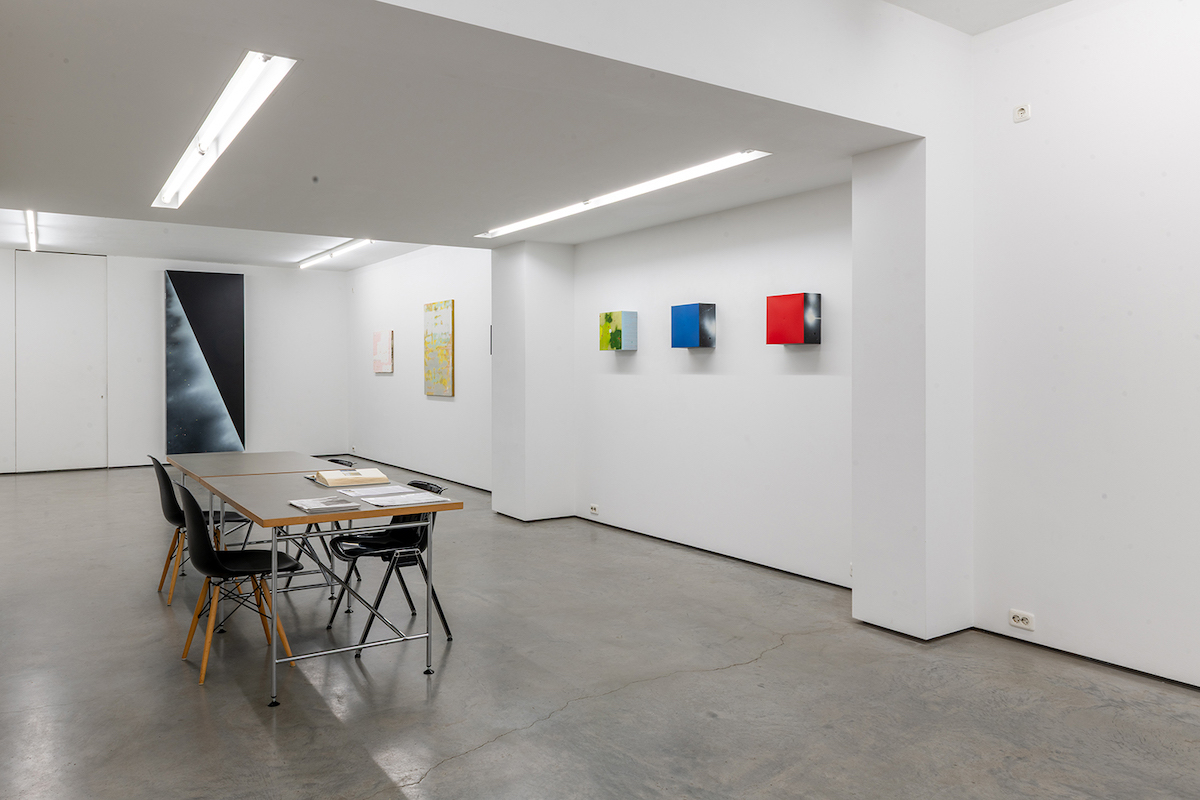
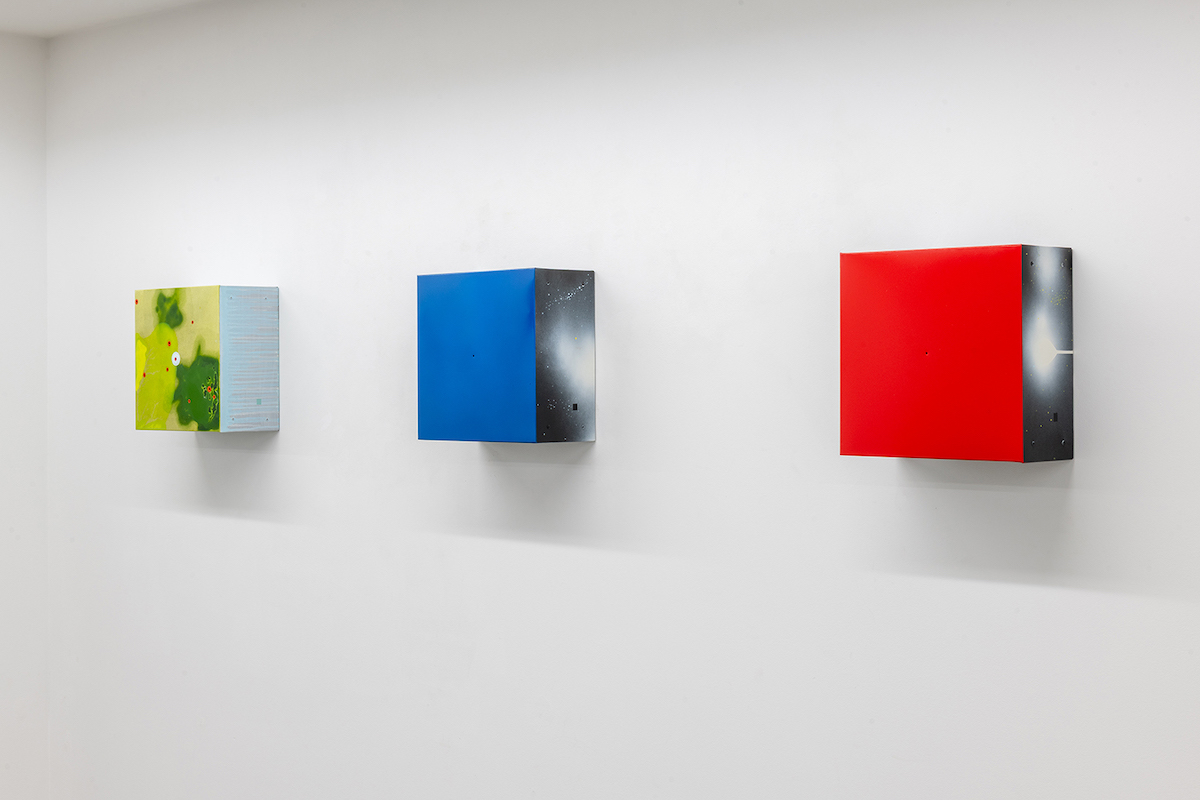
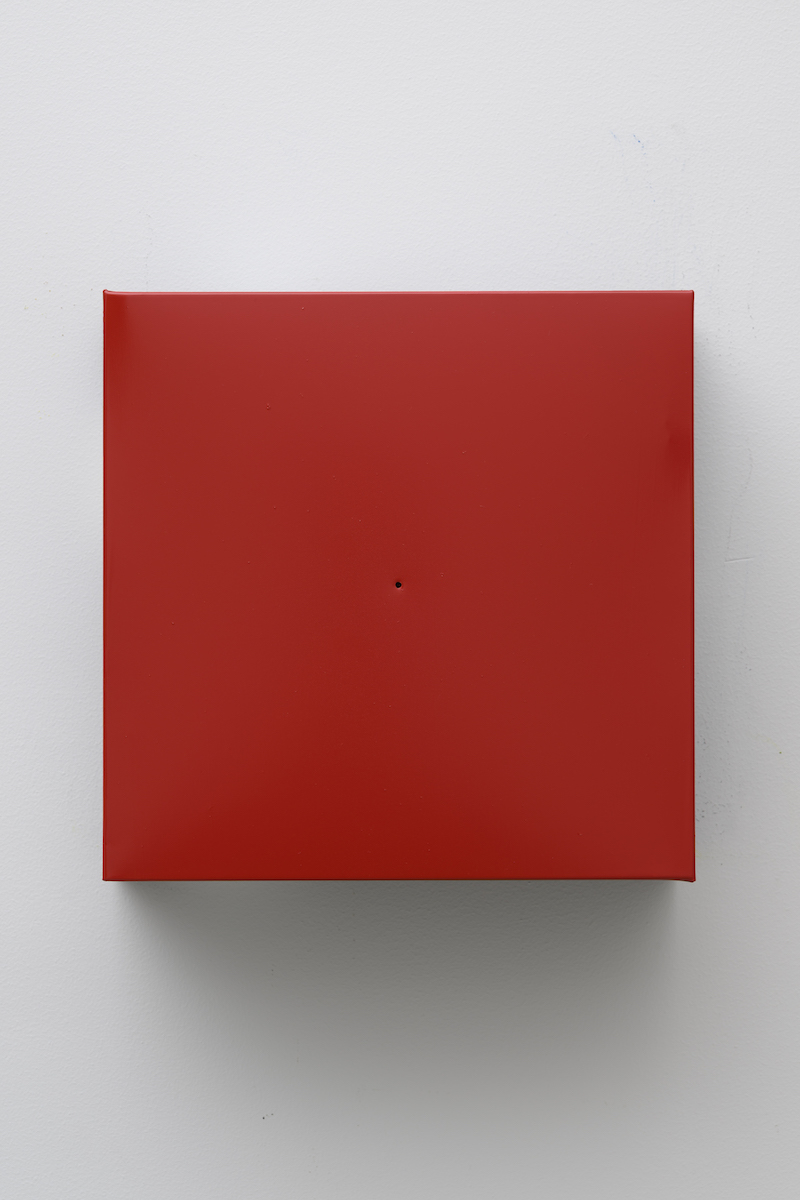
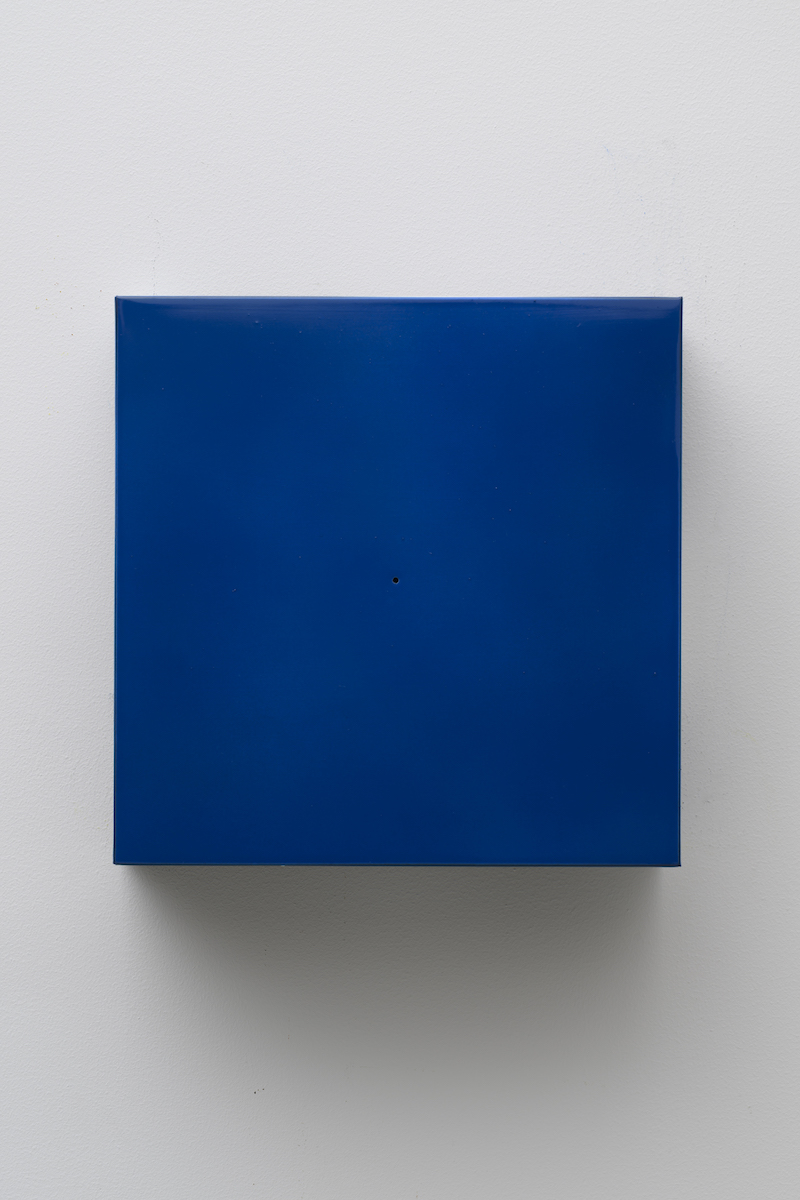
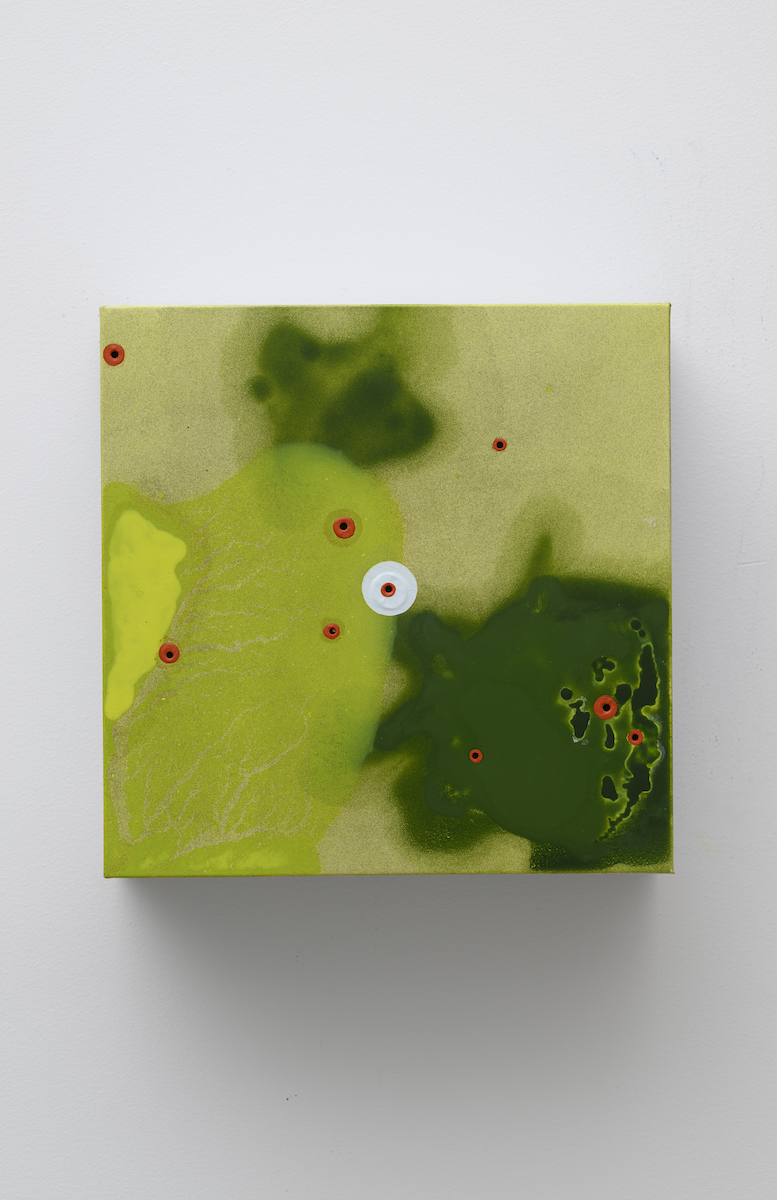
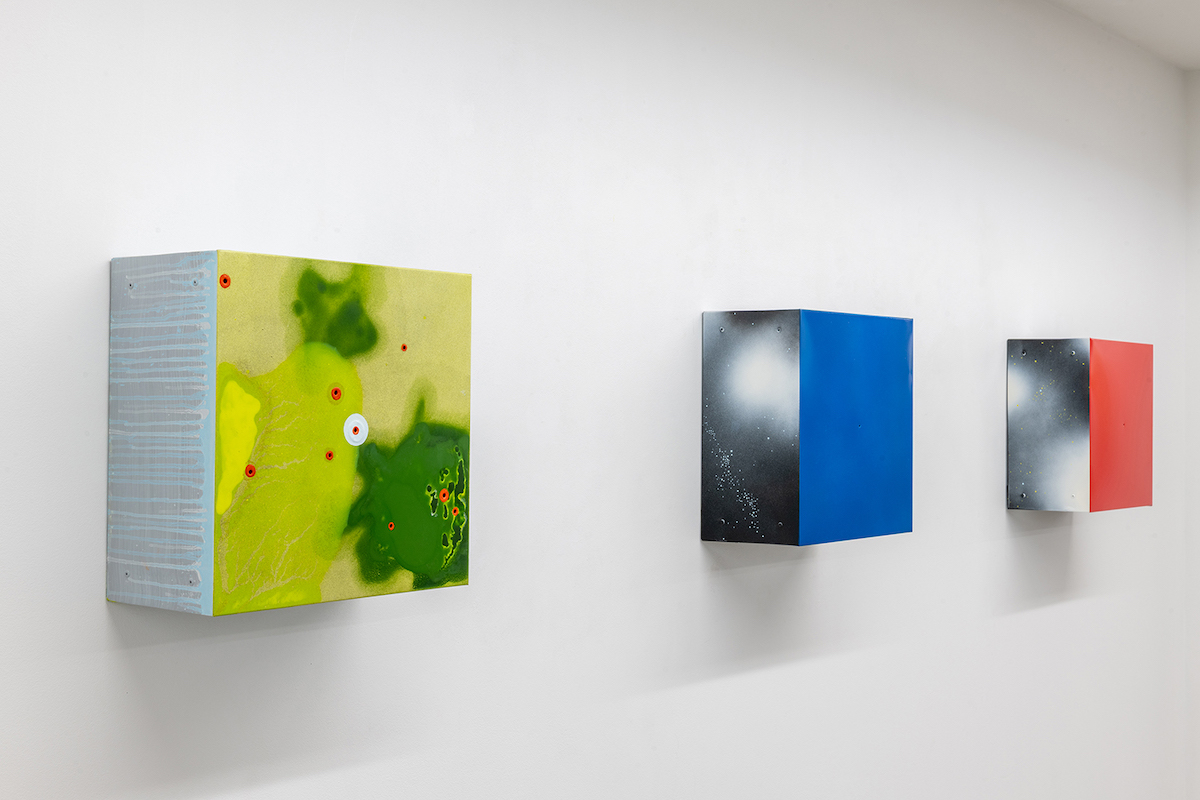
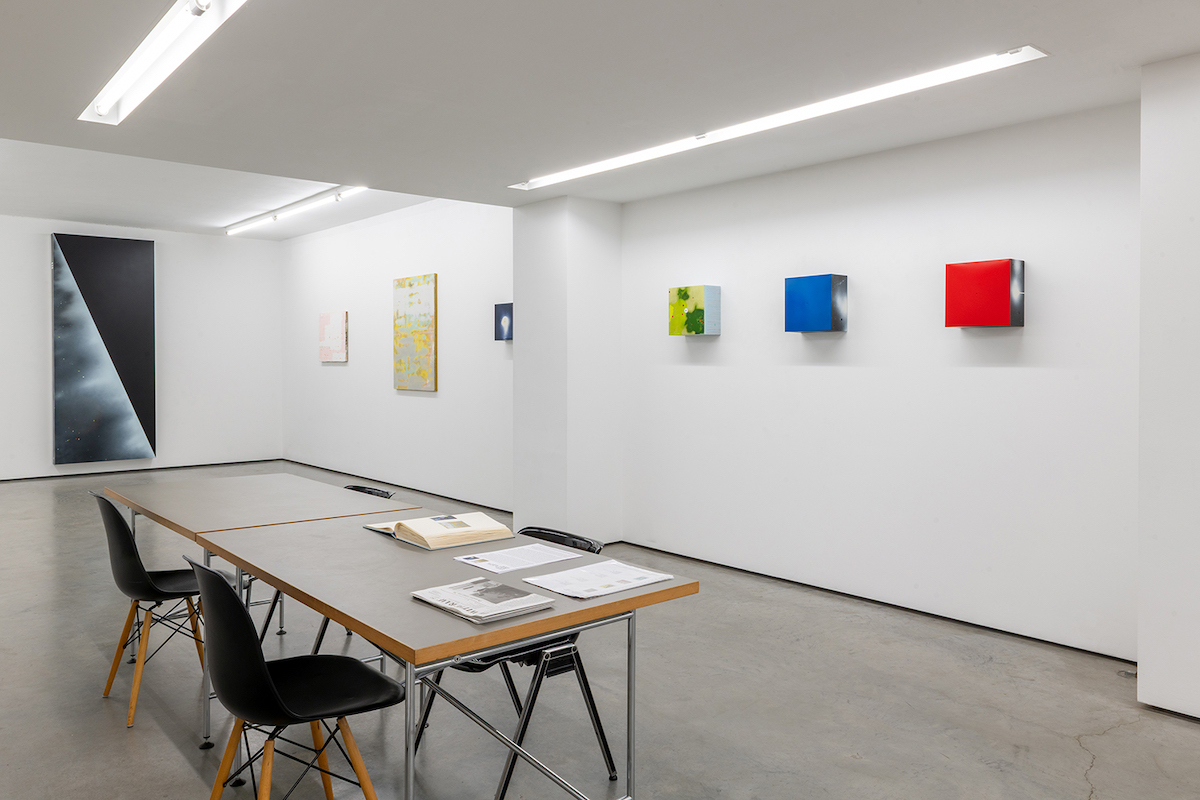
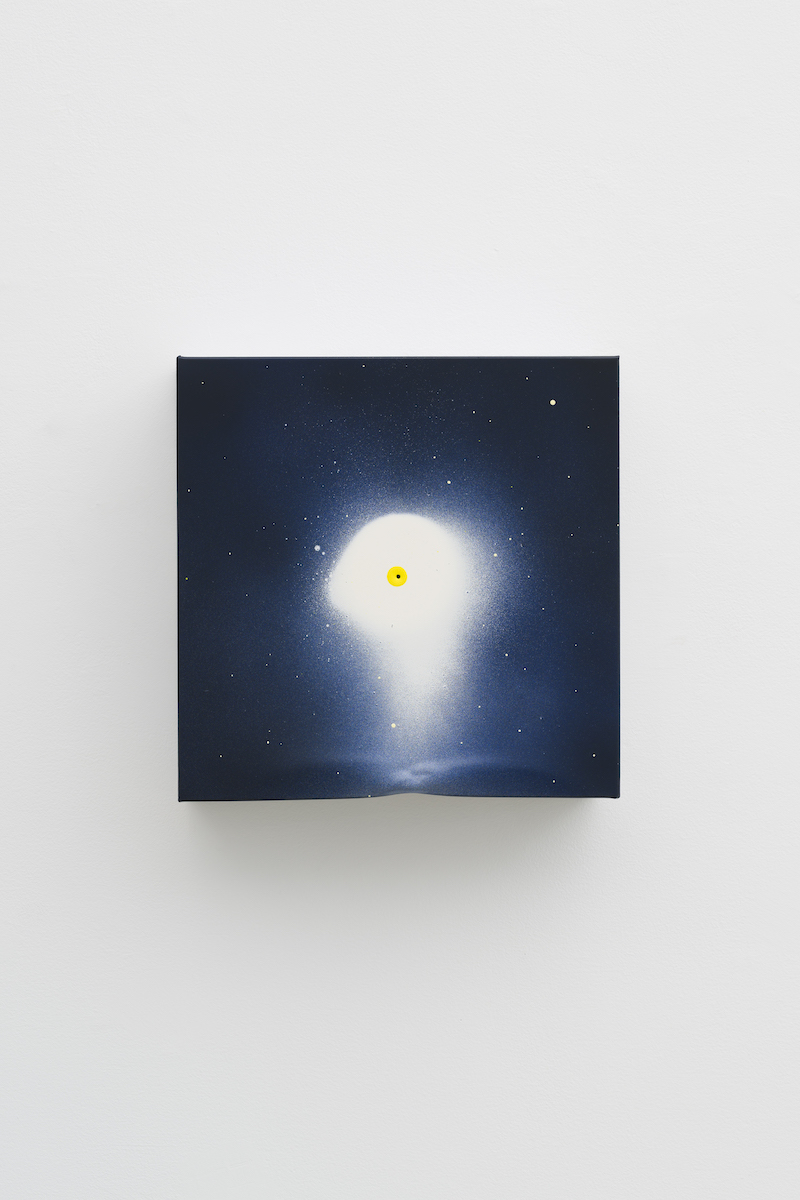
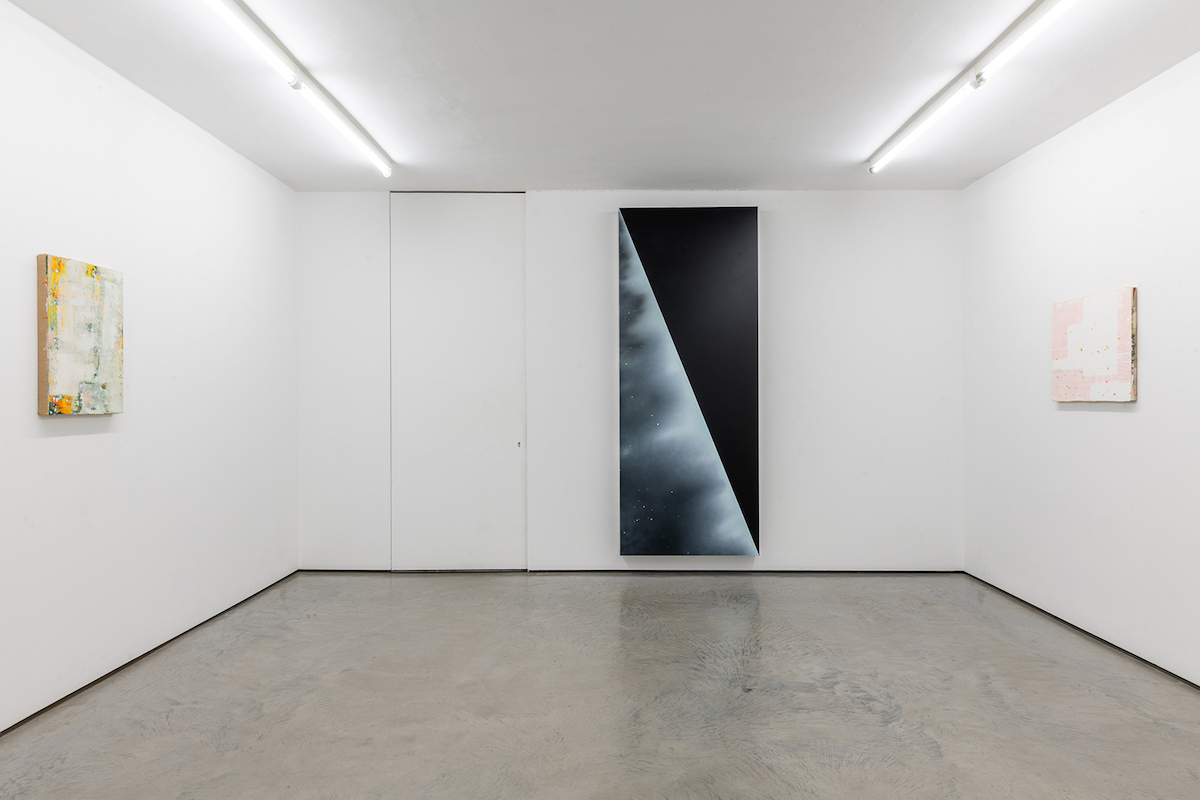
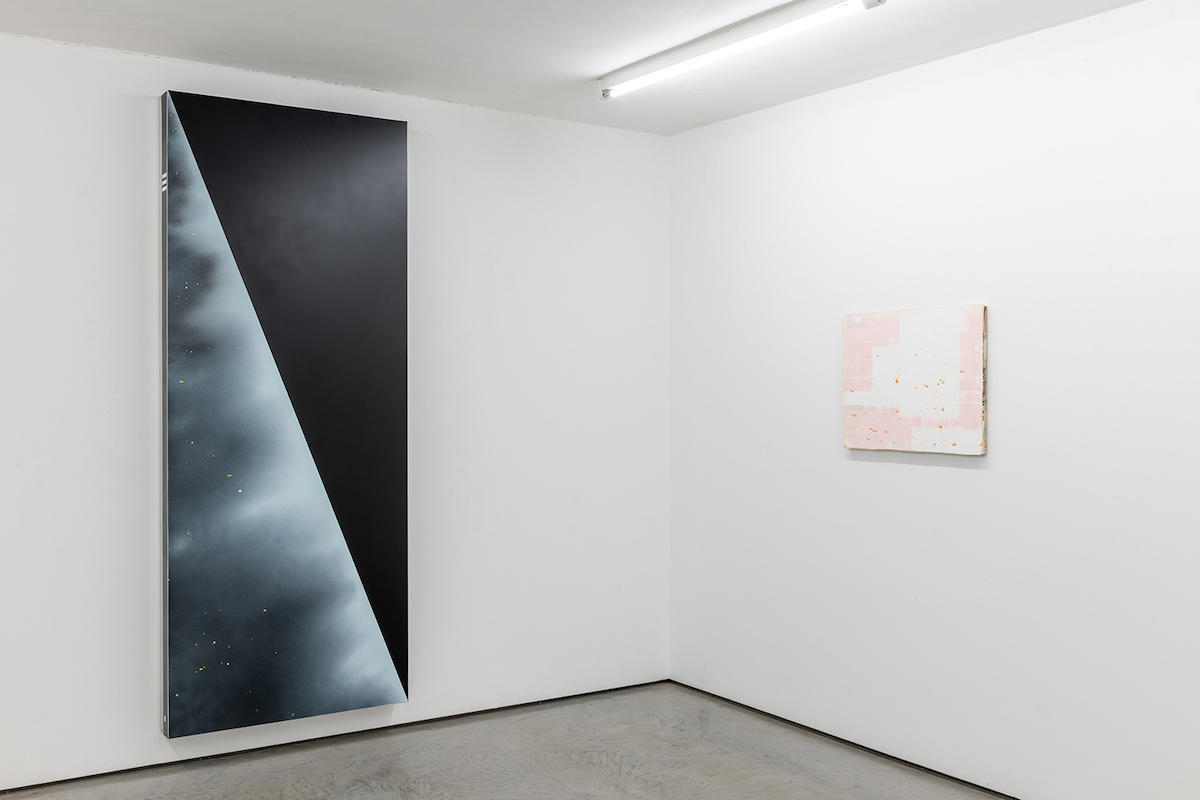
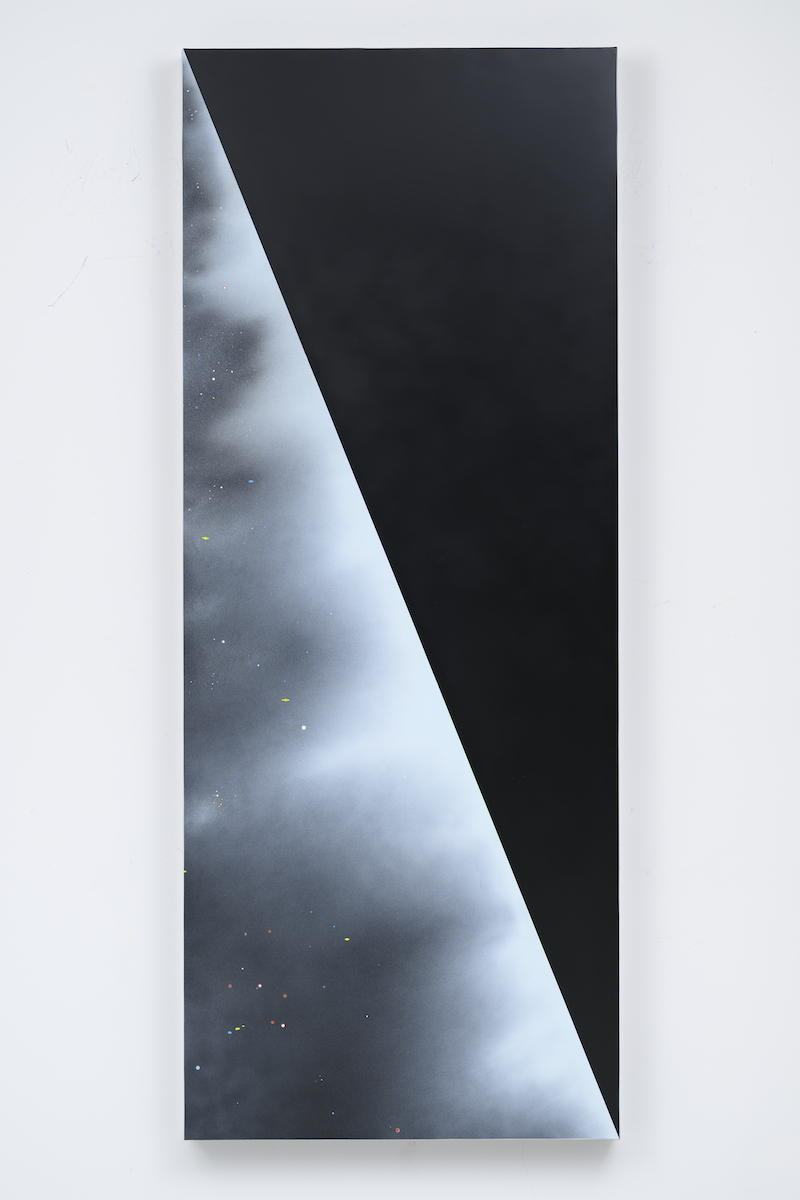
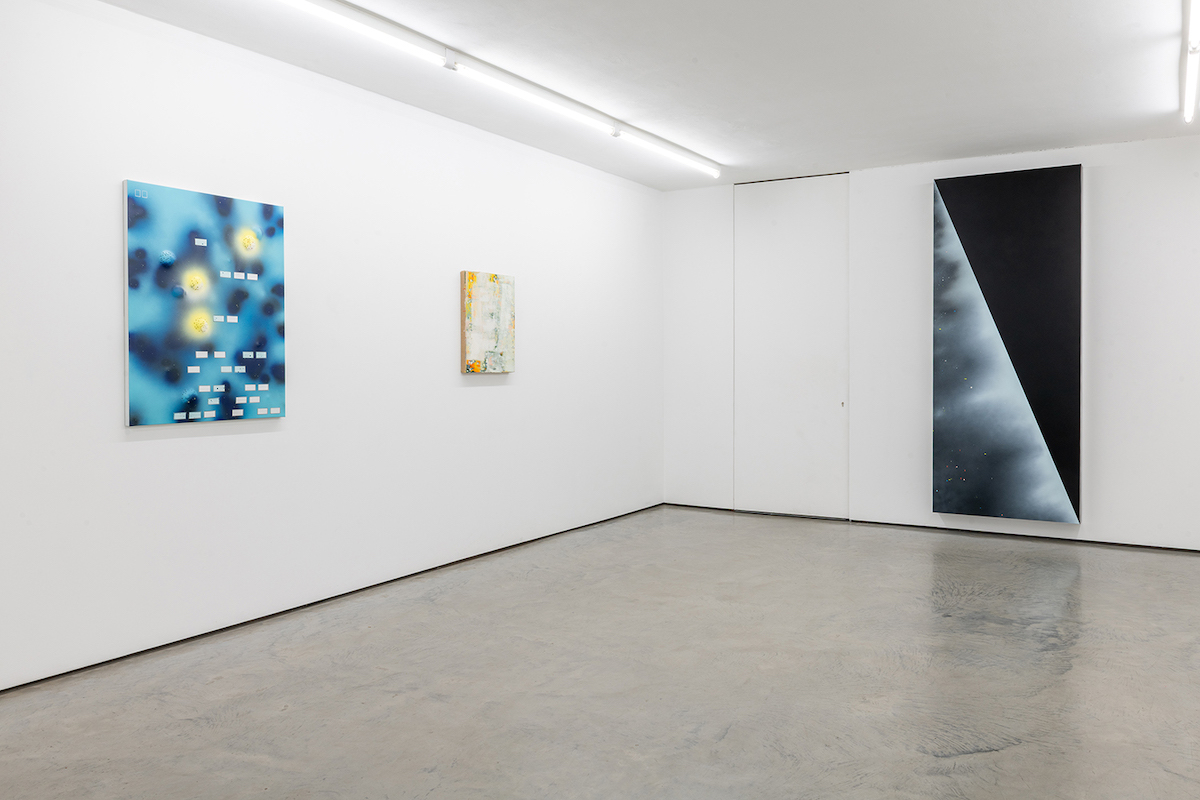
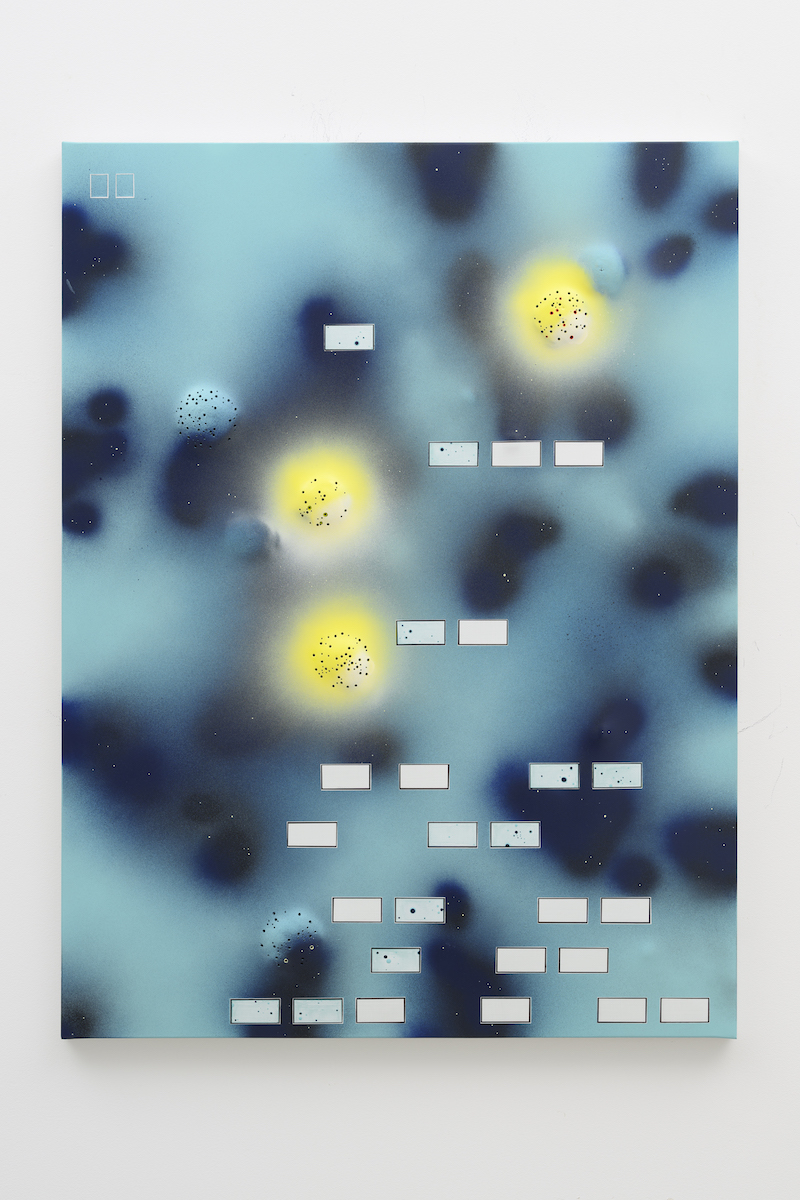
A tall and narrow painting, diagonally split into a deep-black right half and a lighter left half. The clash of dark and light creates a clear dividing line between the two surfaces. That line flashes brightly and becomes cloudy in the left half. With the recent solar eclipse still in mind, the image of HEAT XCIII (2025) by Han Schuil (1958) instantly evokes cosmic infinity. The small white and colored dots in the left half heighten that association. The work is part of the series HEAT, which the artist has been developing over the past ten years and from which he now shows recent works in the gallery. As always, the motive for these works was both coincidental and concrete: “The artist’s problem is that he always needs a motif,” says Schuil. “I have overall themes in which I believe – those are about the big questions in life – but motifs are just as important to me. These sometimes present themselves in an overwhelming way, like the newspaper photo of an athlete in his sports gear that I once saw on waking up with a hangover and seeing the paper in front of me. That was literally an epiphany. It’s how it went, too, with the infrared photographs that I used for the works in this exhibition. A motive or a motif gets taken to the studio where, ideally, through the painterly process, it begins to lead a life of its own, to form its own world.”
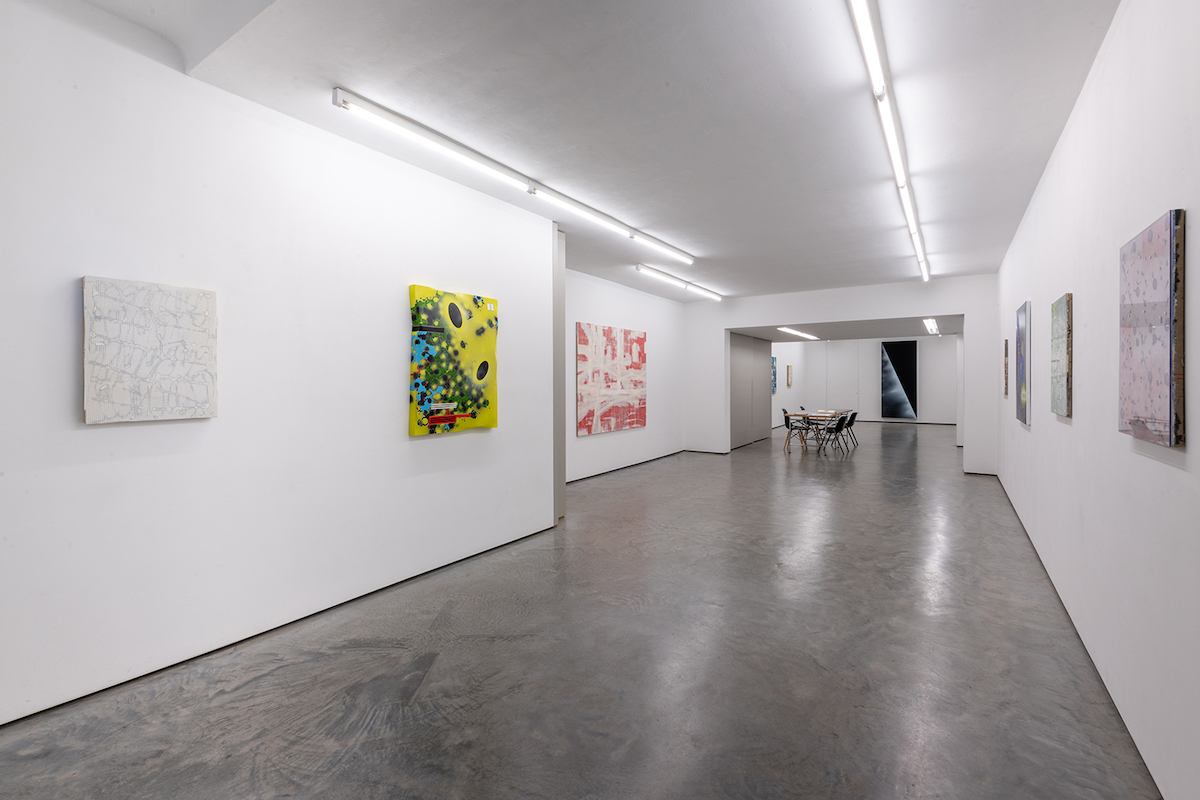
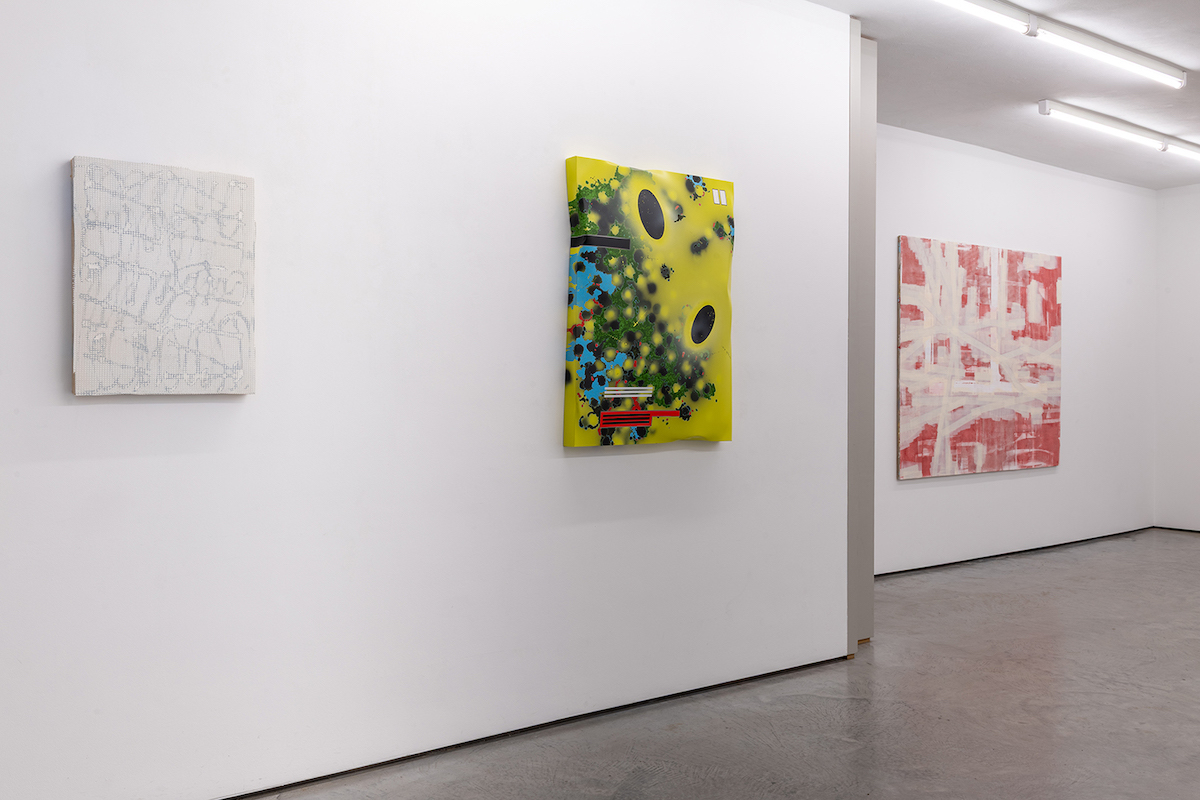
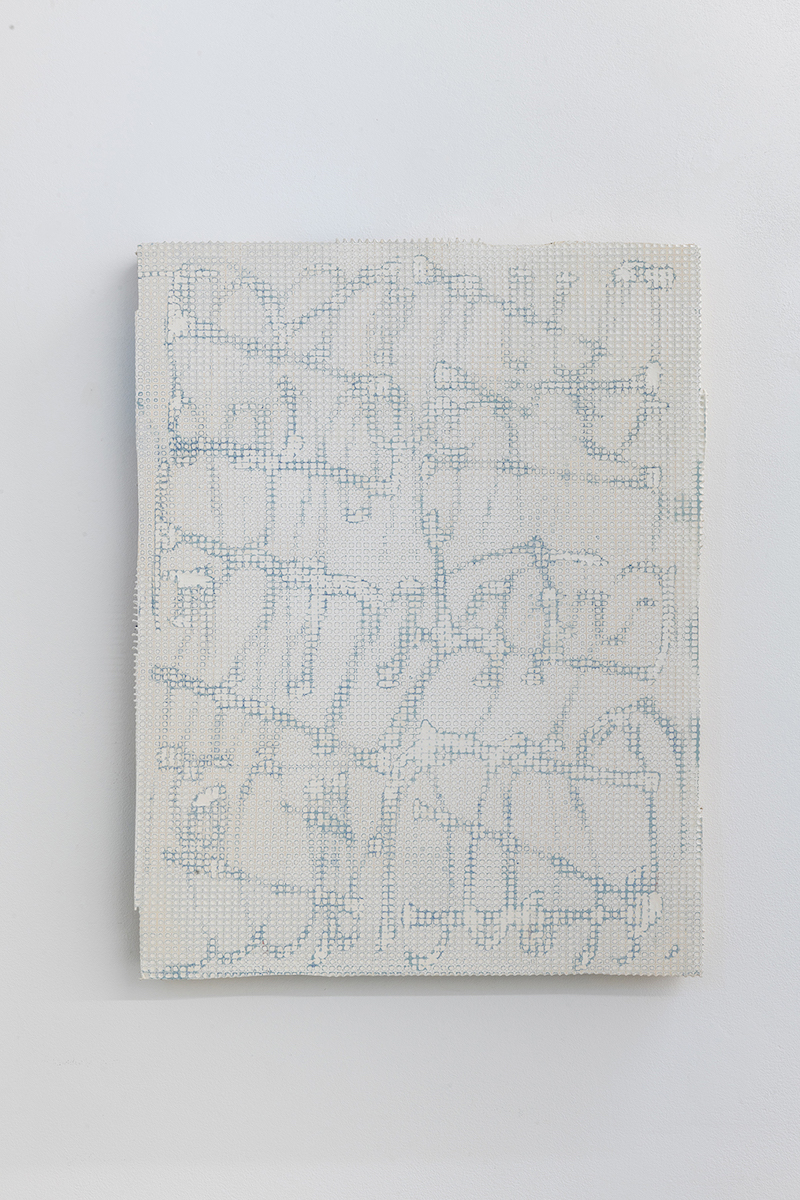
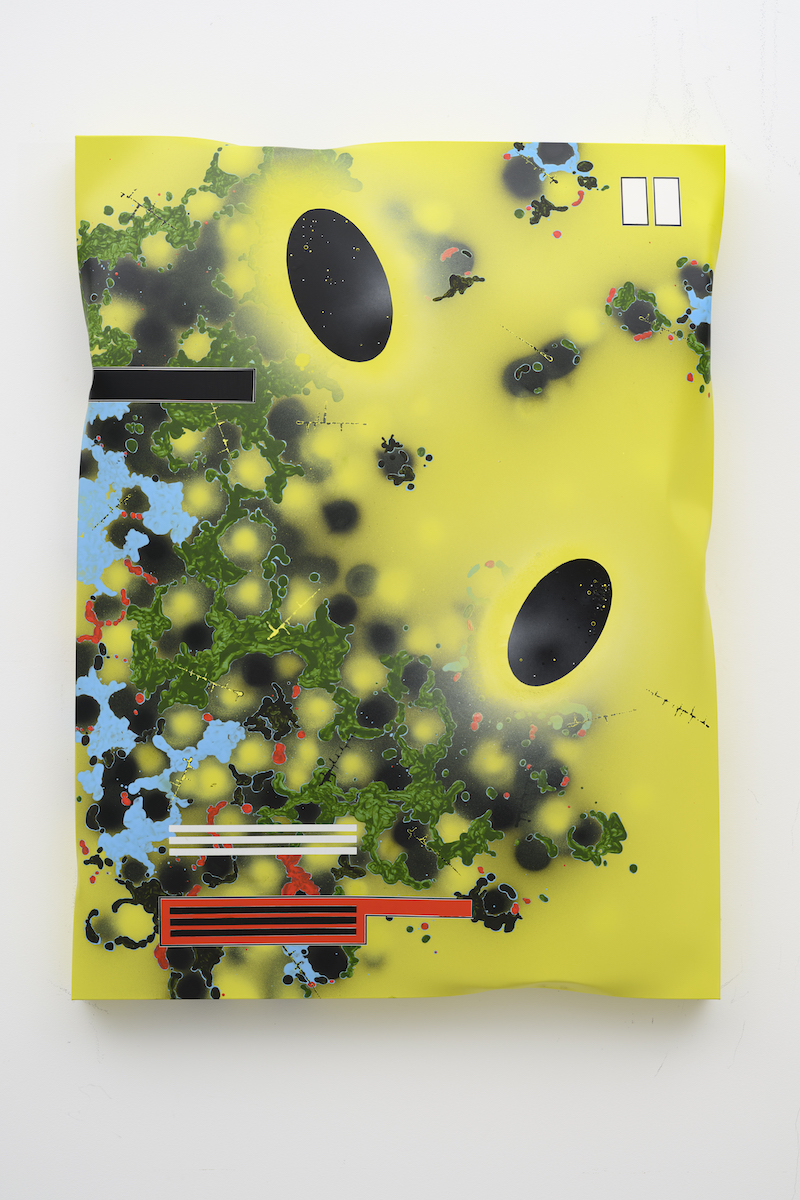
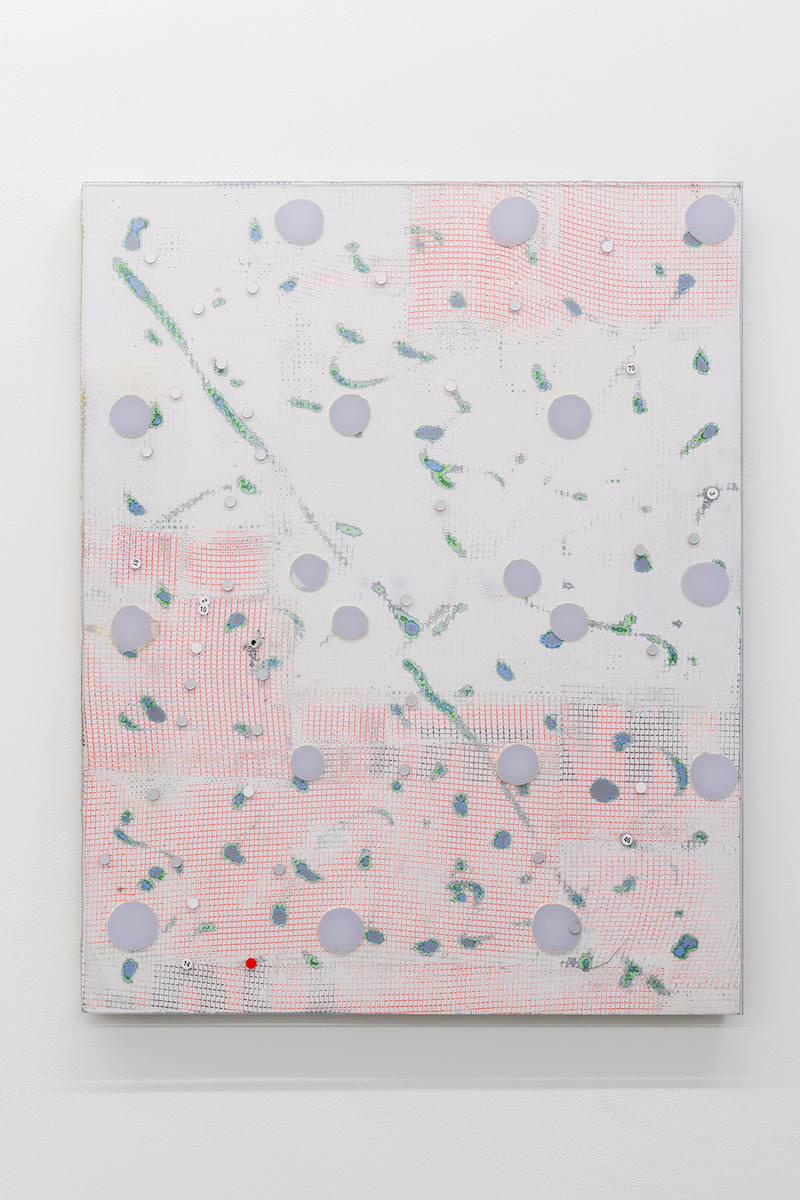
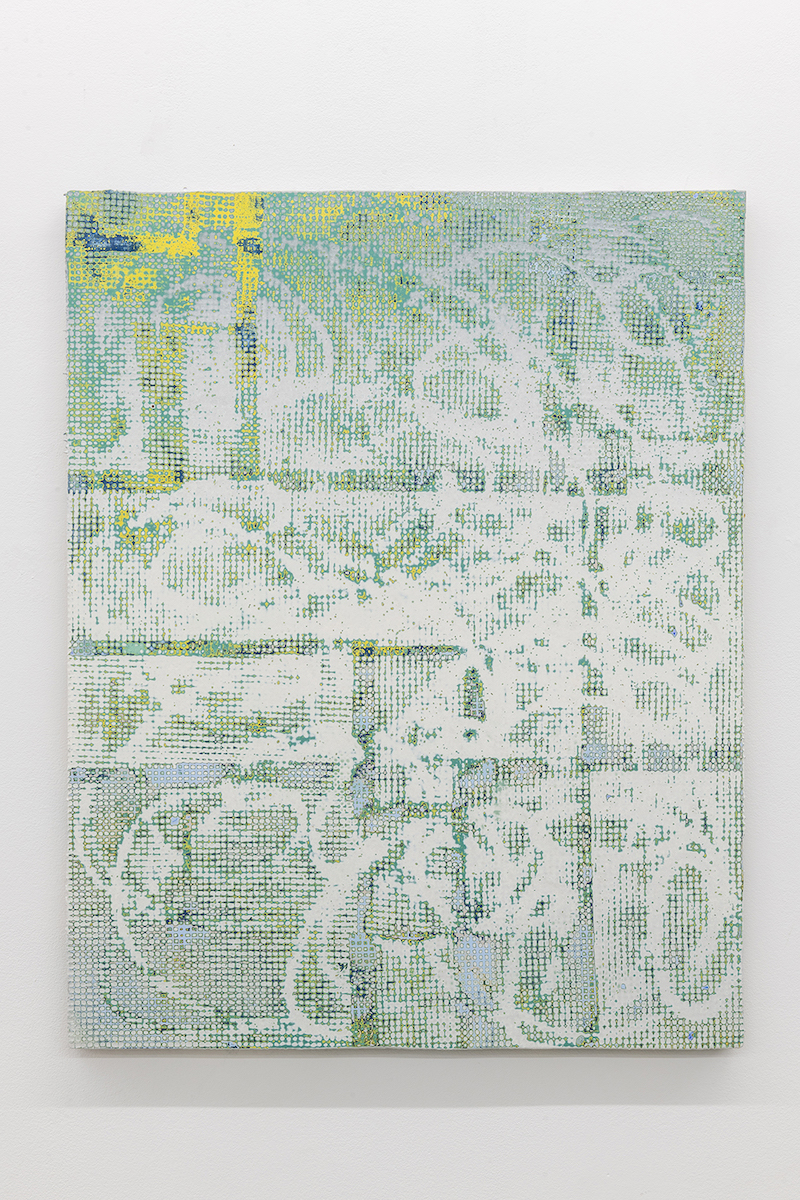
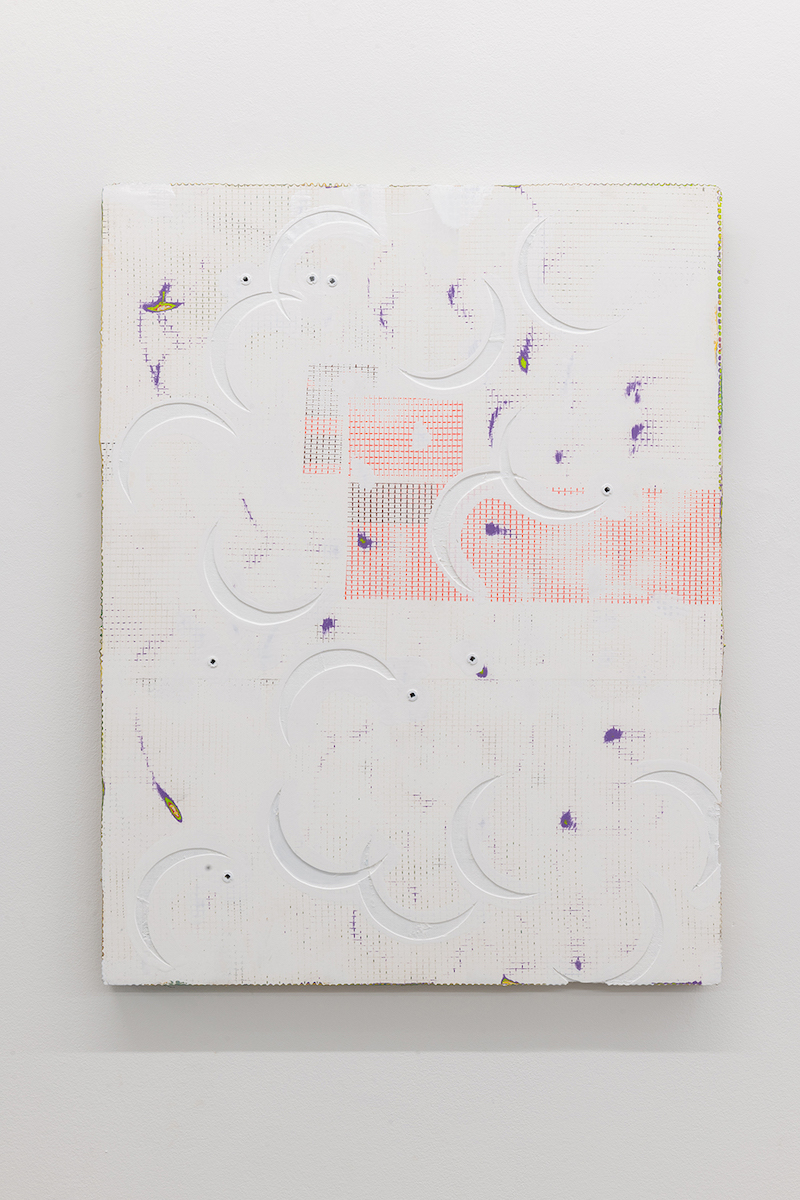
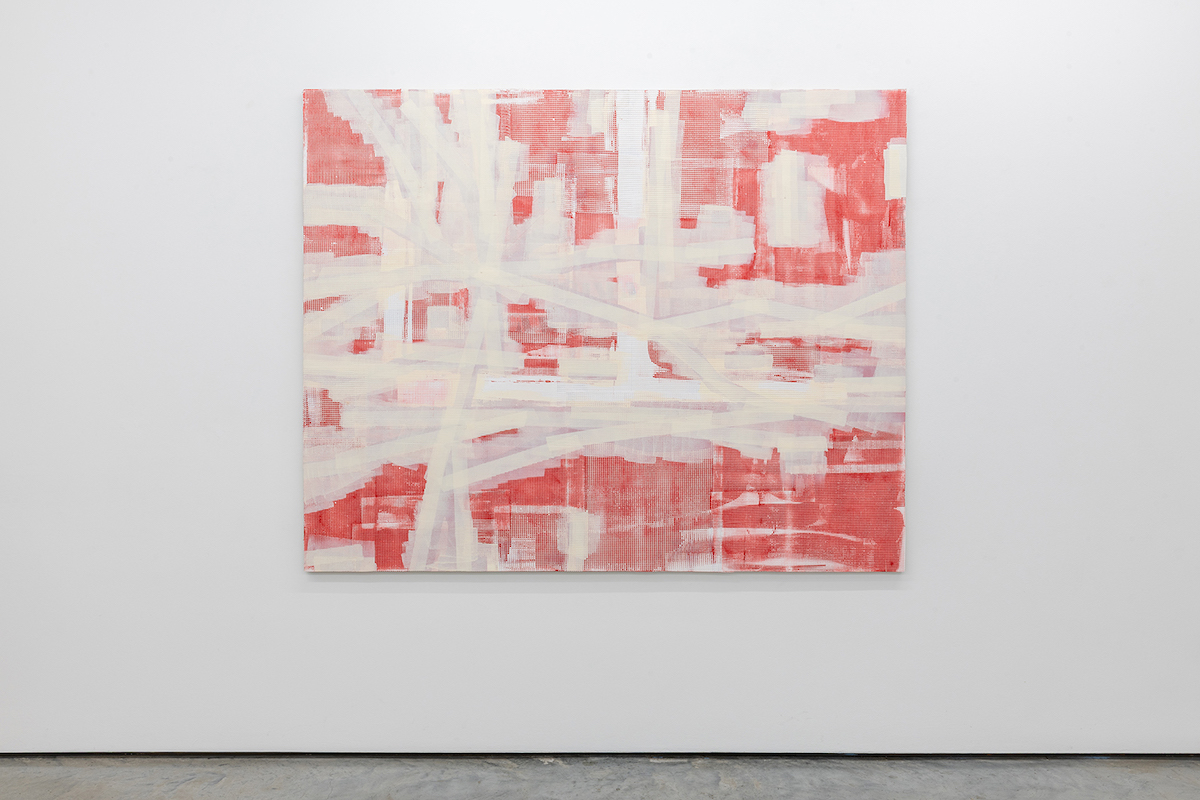
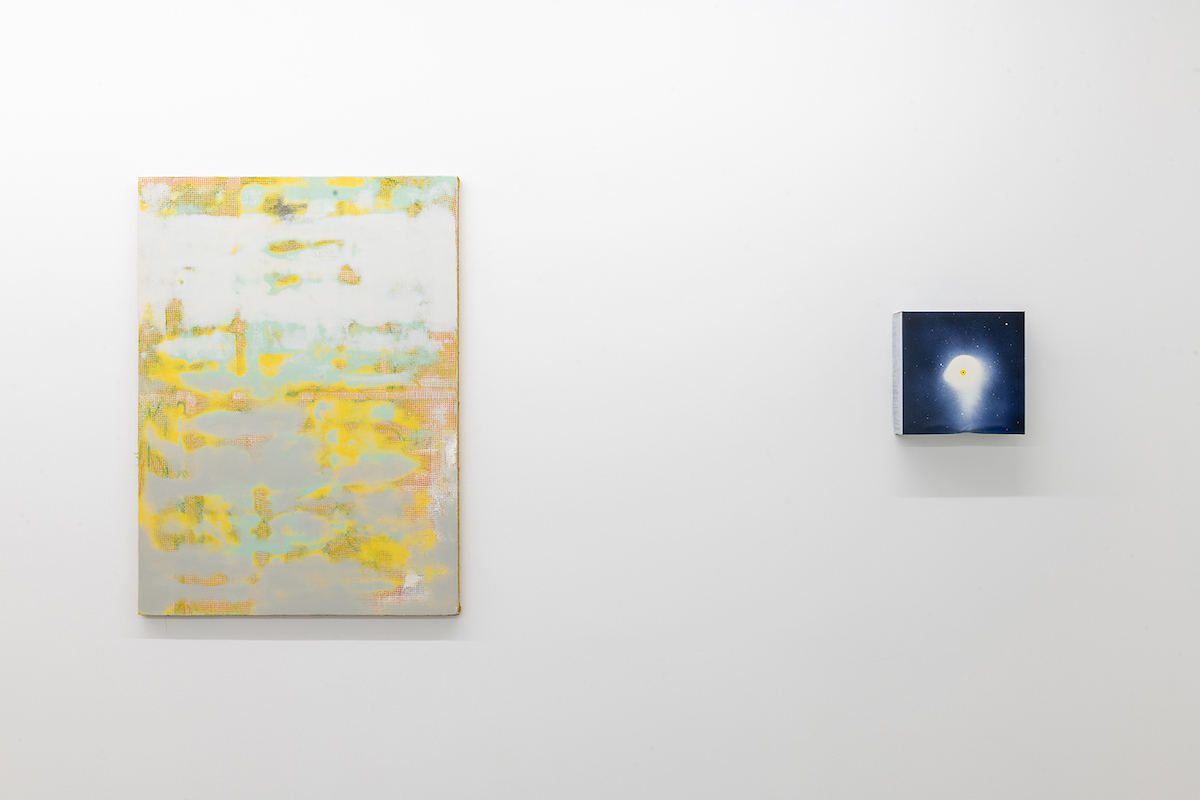
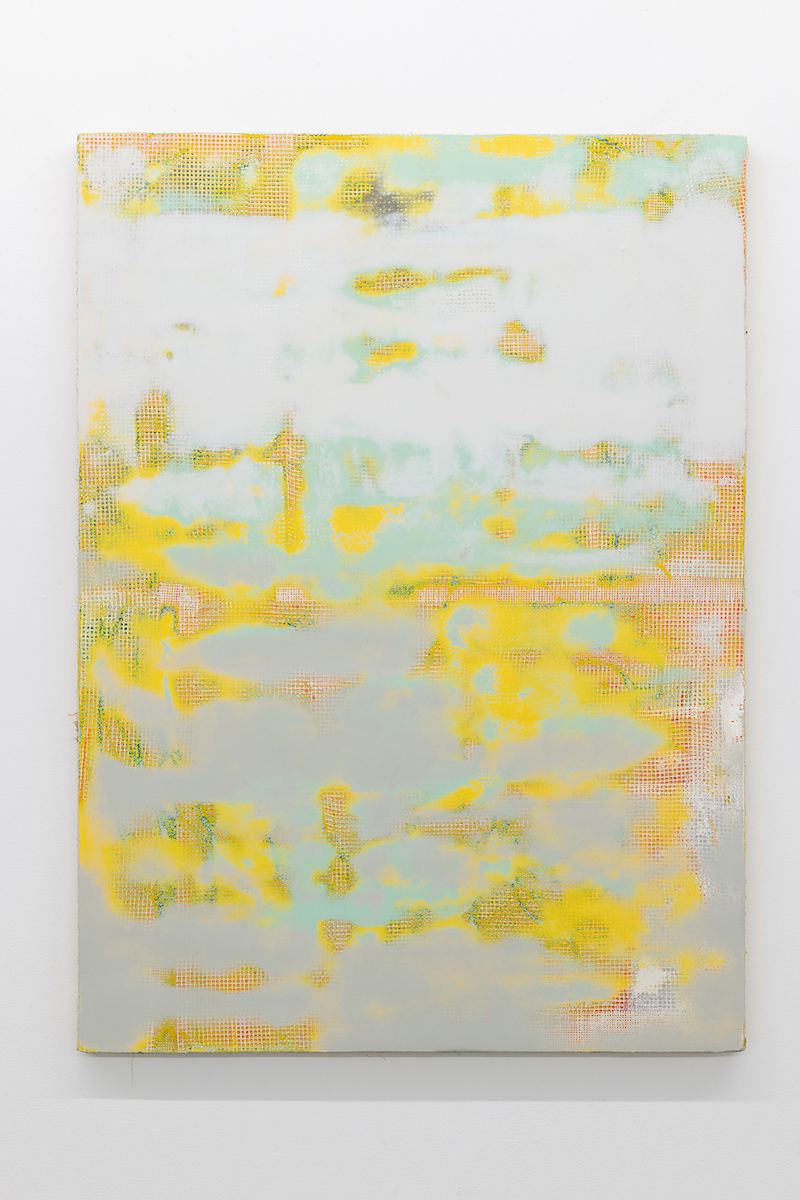
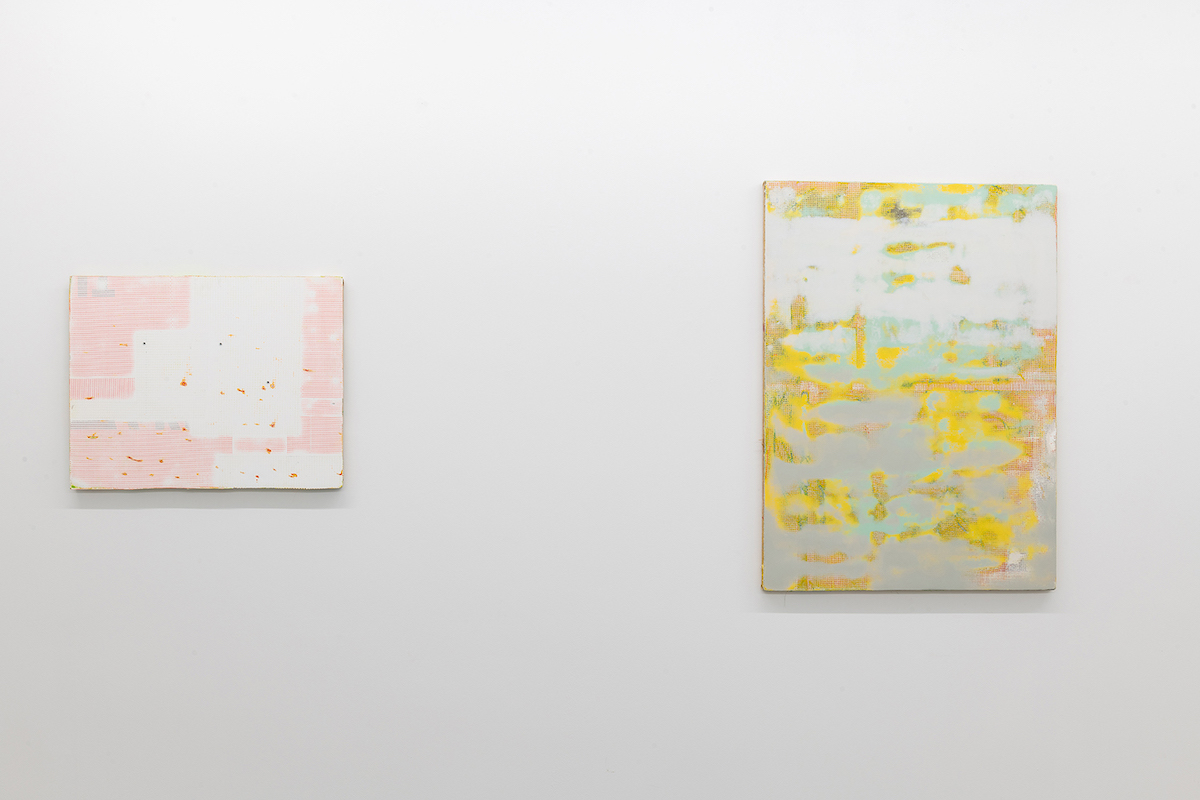
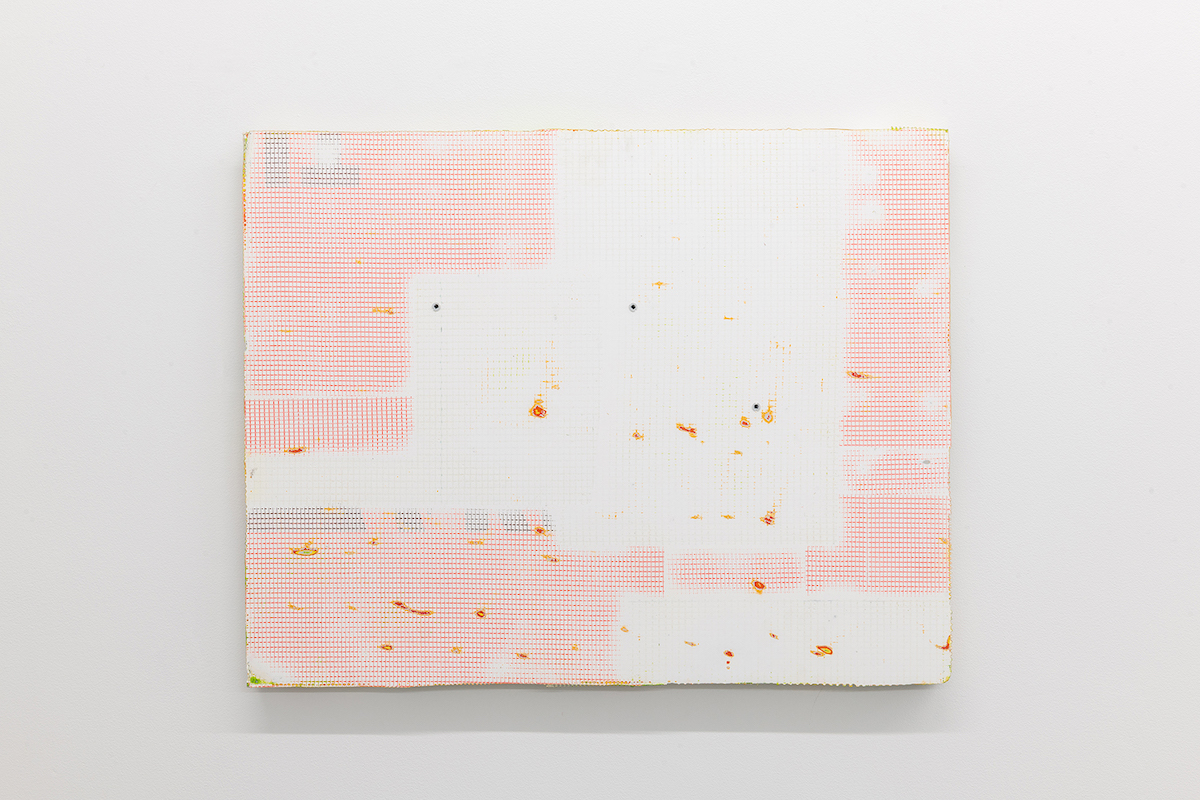
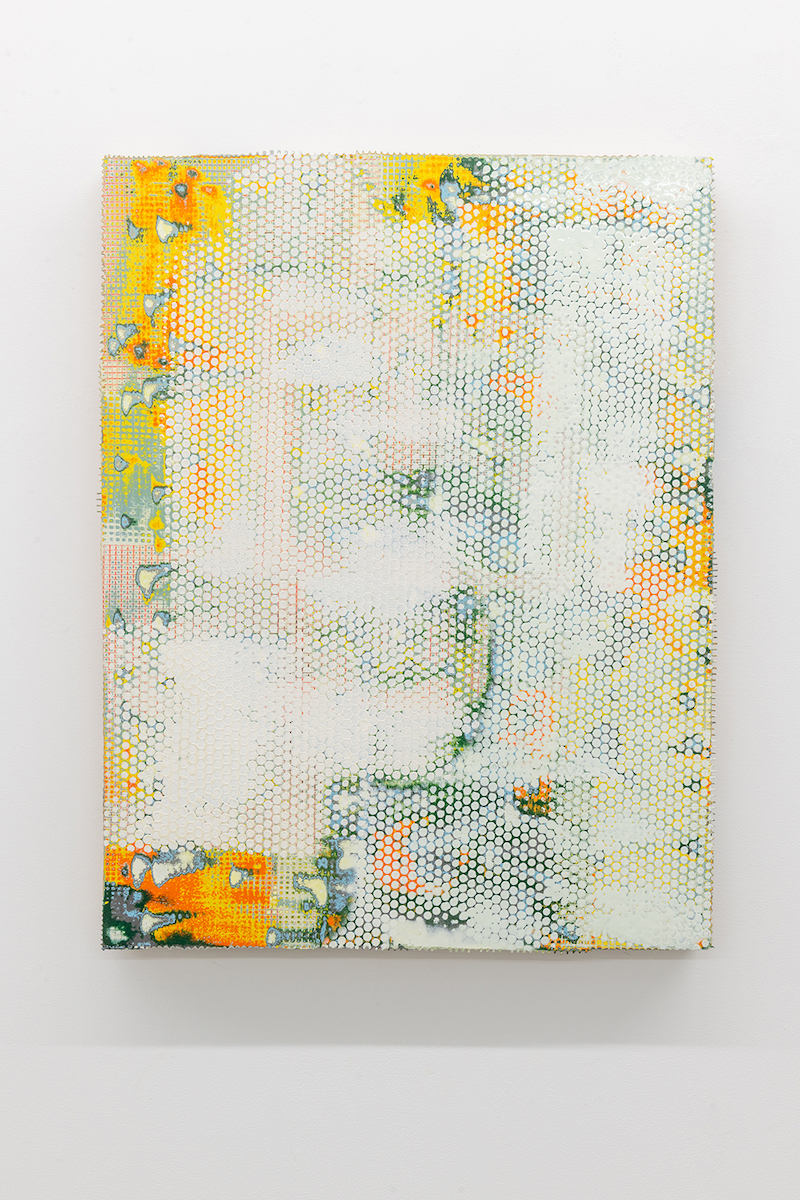
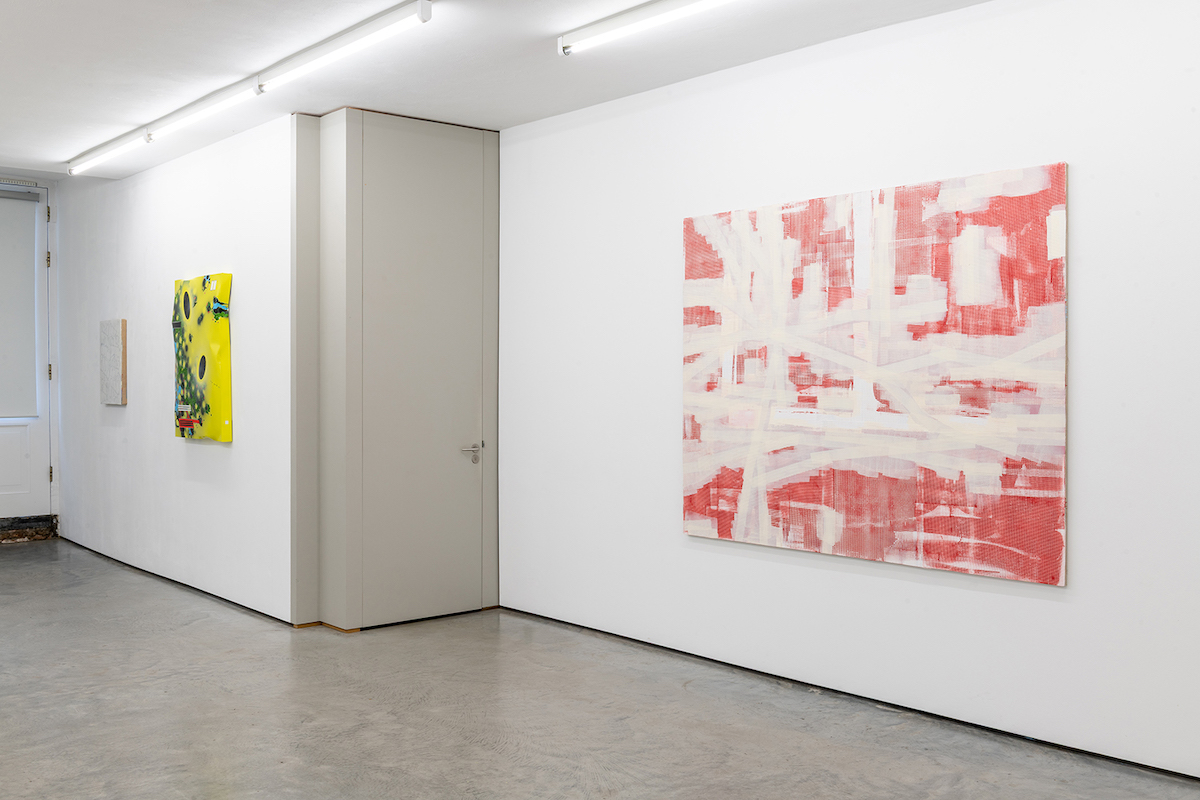
Ricardo van Eyk (1993) has, on the other hand, a keen eye for the details of the urban environment. He filters the images that he encounters on the street and links them, in his work, to his preference for industrial-looking material. Often these are spatial paintings that refer to architecture and urban development. ACME VIII (2026) is a work made up of various layers of stucco gauze that the artist has treated with paint, but also with stucco. The surface is repeatedly sanded down and reworked, making the color – red and all sorts of hues ranging between white and beige – brighter or in fact more subdued. The pieces of gauze are irregular in shape and varying in size. Lying on top of the texture of gauze is a web of bands that look like tape, but which are also painted. This work gives the viewer an almost physical sense of being swept into a spatially hectic realm reminiscent of accelerated film images of busy intersections. With Van Eyk, too, the motive for his work is concrete, but it isn’t the reality outside the studio that determines the work: “Because of the material and the practical aspect of choices made in the studio, you actually become more focused, and that leads to new observations,” says Van Eyk. His work attests to a vision of our world which is not only serious but also conveys a certain lightness and humor: works in the exhibition have the title ACME. This word is said to be an acronym for ‘American Company that Manufactures Everything’. During the 1920s the word was often used for names of companies that would appear at the top of alphabetical listings in telephone directories – such as the Yellow Pages – and thereby suggest that they were the best. Van Eyk remembers the word appearing on product packaging in cartoons from his childhood; here it was used ironically, since the products were often flawed or exploded – with all the catastrophic, adverse effects that this entailed!
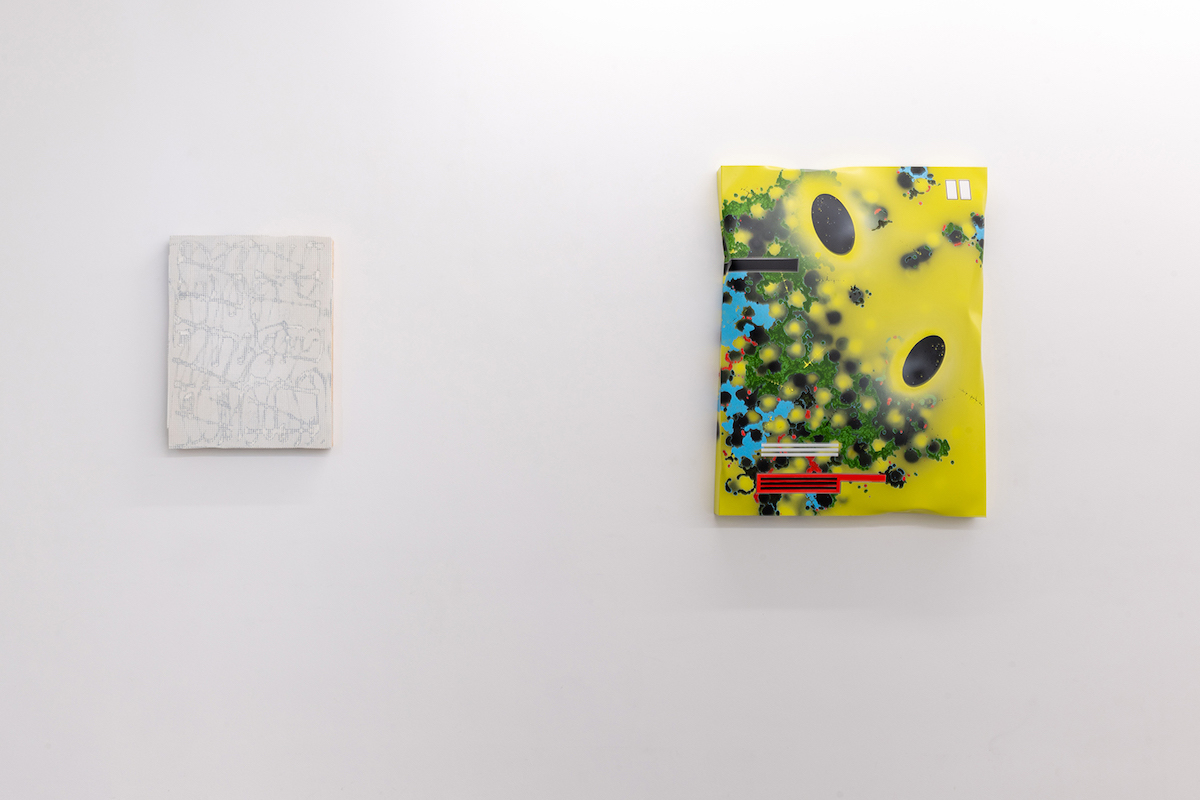
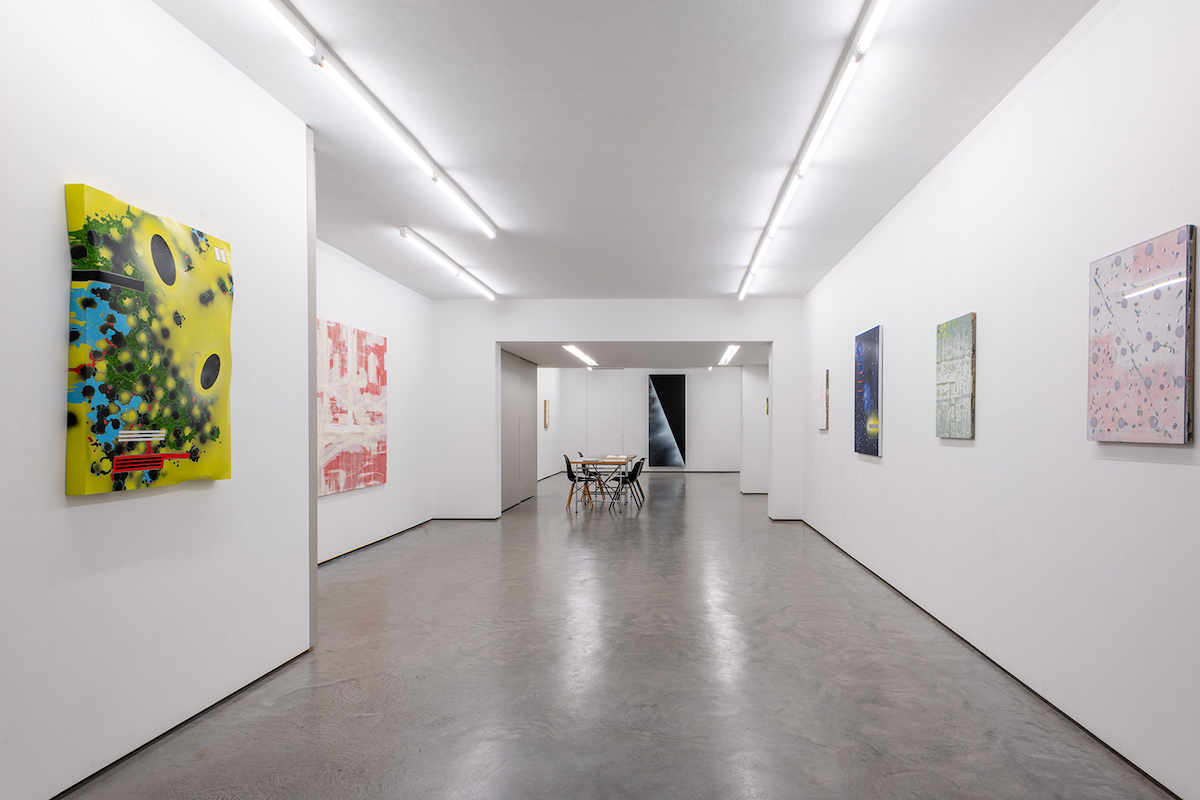
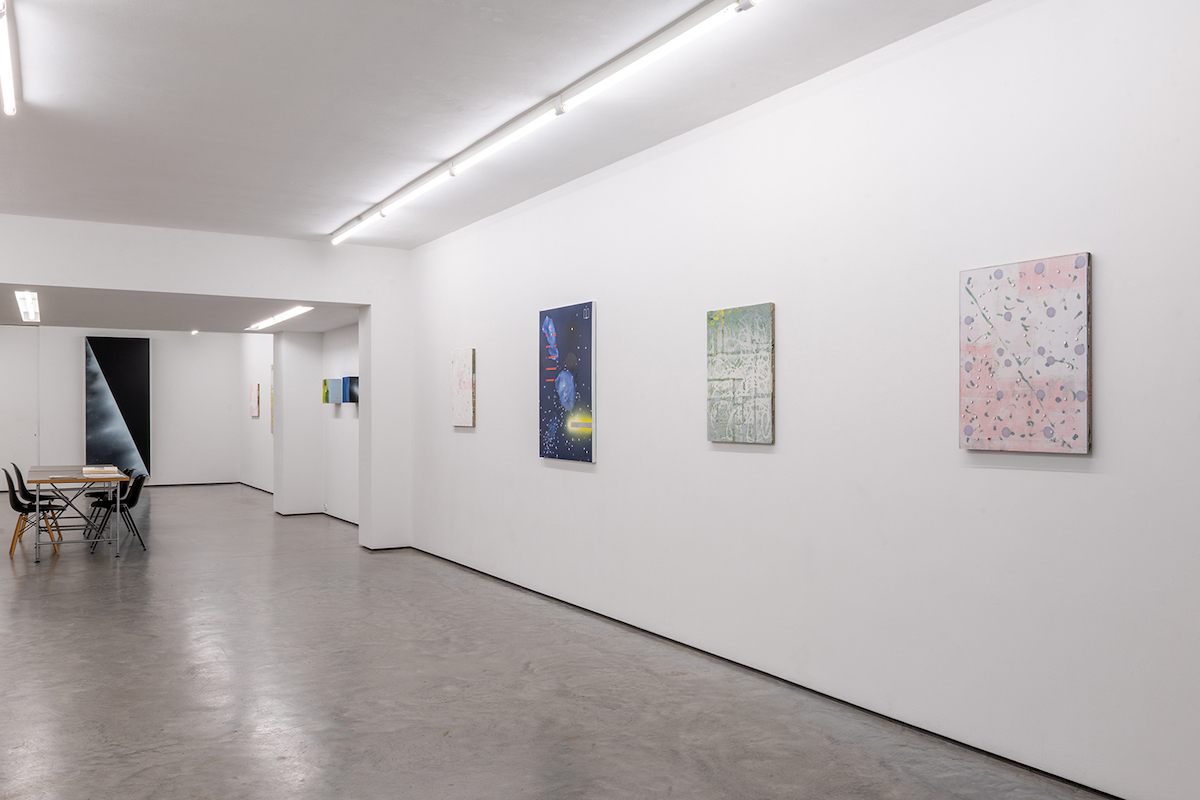
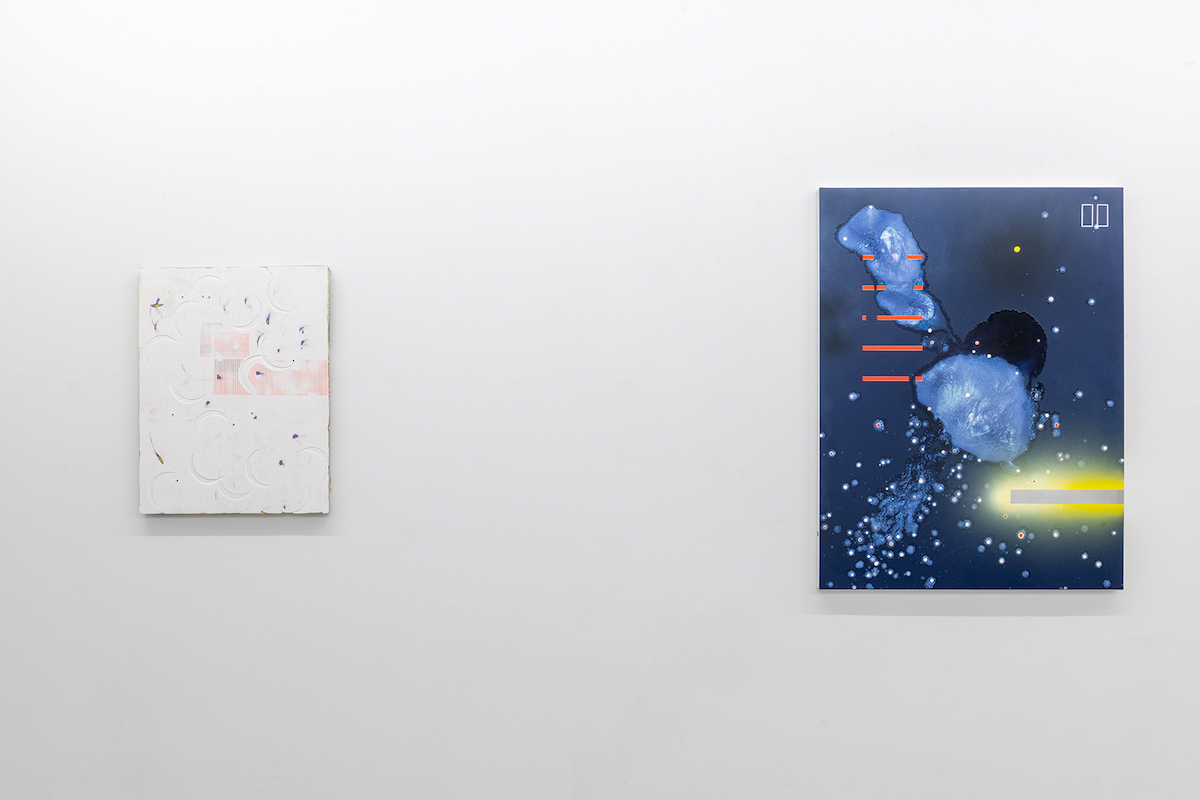
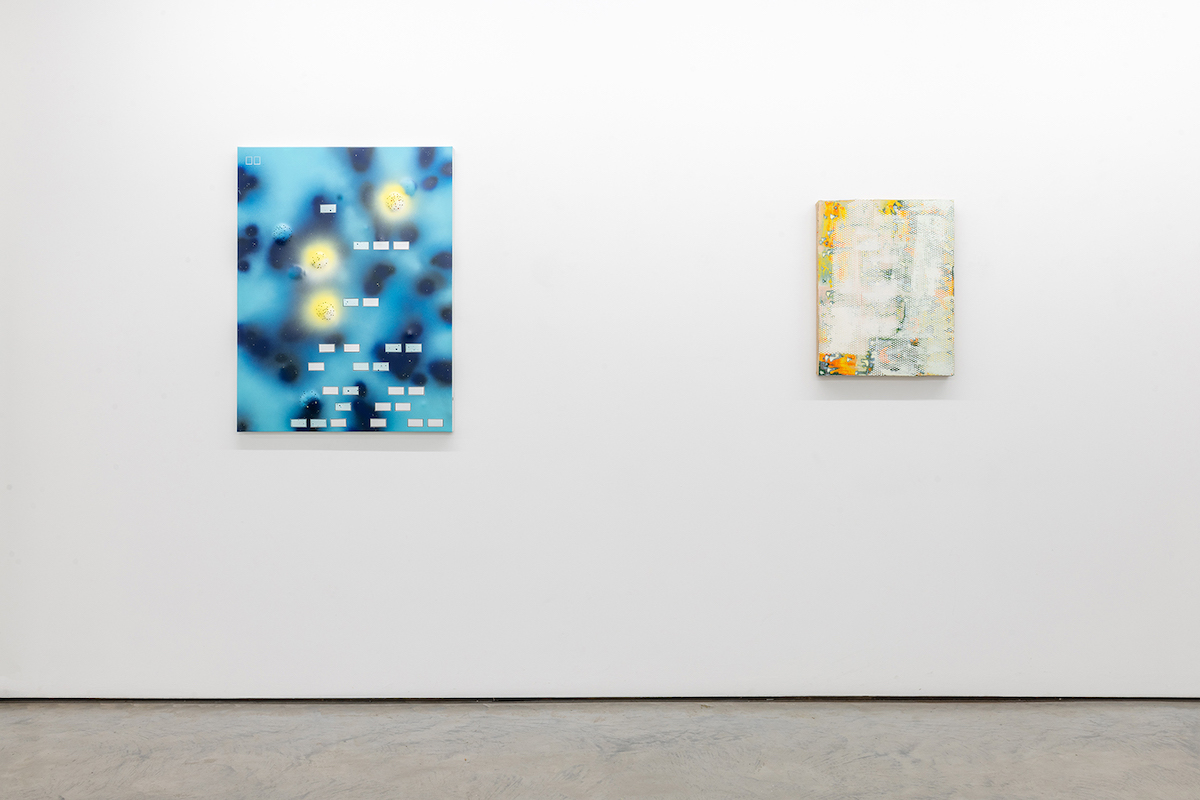
Van Eyk invited Schuil to join him in a dual presentation at the gallery. The title INTERVIEW, which comes from the French word entrevue, expresses the idea of an encounter. In the exhibition this encounter becomes literally visible in the relationship that the works take on with each other. The earthly, physical drive that emerges in the surfaces of Ricardo van Eyk’s paintings is coupled with the sublimated intensity of color, form and texture in those of Han Schuil. Beauty and poetry extend a hand to each other, but mainly we sense a crackling of energy between the works, fortunately without explosions so far!